Choosing a camera kit: Canon RF primes, zooms and the right setup for your film
Why the camera body is only one part of the decision, and how lenses, support and sound shape a workable production kit.
Choose for the day you need to shoot
An interview, a live event and a controlled brand film make different demands on a camera kit. Start with the location, available crew, sound requirements and final delivery. A camera that works beautifully on a tripod may need a different build for a moving sequence. The useful question is not simply which body is best, but which complete setup will let the crew make the intended images consistently.
Prime or zoom: give each a job
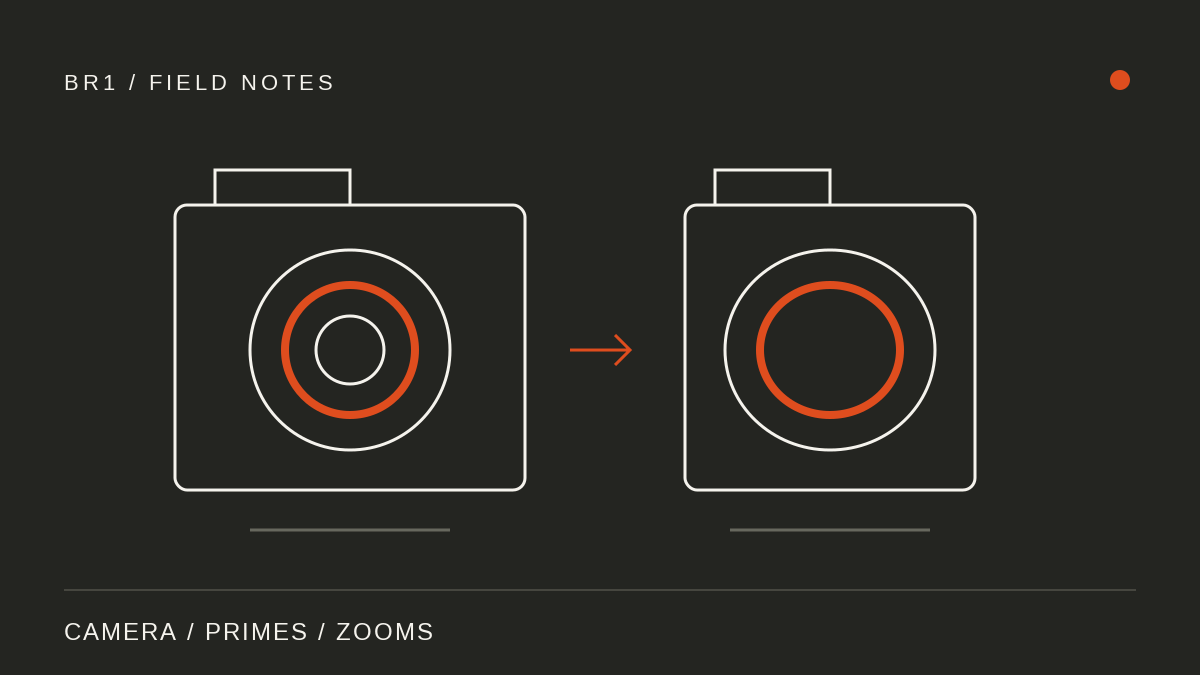
A prime has a fixed focal length; a zoom lets you adjust focal length without changing the lens. A 24–70mm can make reframing practical when the action moves quickly. A 50mm or 85mm prime can suit a planned portrait setup. Framing, camera position, aperture and sensor format all matter: a particular focal length is not a universal recipe for a cinematic image.
What is in my Galway kit
My inventory includes Canon C400, C50 and C70 cinema cameras, an R5 Mark II, RF zooms from 15–35mm through 70–200mm and RF f/1.4 VCM primes at 24, 35, 50 and 85mm. That range offers options for different briefs. It does not mean every lens needs to come out on every production; a focused selection can make the day more straightforward.
Build the system around the image
Leave room in the plan for stable support, intelligible dialogue, lighting control, power and media. Those decisions affect how much usable material reaches the edit. If you are looking for a camera operator or director of photography in Galway, share the brief before specifying the entire kit. We can then discuss an appropriate camera, lens and support package together.
Sources & further reading
Let’s plan your production.
Tell me about the story, location and result you have in mind. Based in Ireland, working worldwide.
DISCUSS YOUR PROJECT ↗